China has become a major sourcing base for inflatable watercraft, serving leisure, rescue, fishing, and tender markets. This guide examines China’s top 10 inflatable boat manufacturers through practical buying criteria. It focuses on construction quality, product range, customization, factory capability, and after-sales support.
The review considers materials such as PVC and Hypalon, along with seam finishing, air-valve design, floor systems, and transom strength. These details matter when an Infatable Boat faces sunlight, saltwater, repeated inflation, and rough handling. Factory experience also deserves attention. Years in the market can help, but experience alone does not prove consistent quality.
Documentation matters.
Where available, certifications, test records, material specifications, and export references provide stronger evidence than promotional claims. We also consider communication speed, sample procedures, production inspections, packaging, and warranty terms. A reliable supplier should explain limitations clearly, not simply promise the lowest price.
Some rankings remain subjective. Public information differs between manufacturers, and factory conditions can change over time. Therefore, this list should support supplier research, not replace independent verification. Buyers should request current samples, inspect welded seams, confirm capacities, and clarify compliance requirements before placing large orders. Small details can reveal larger problems. A neat catalog cannot guarantee dependable performance on the water. Through a balanced comparison, readers can identify suitable Chinese manufacturers and make more informed purchasing decisions.
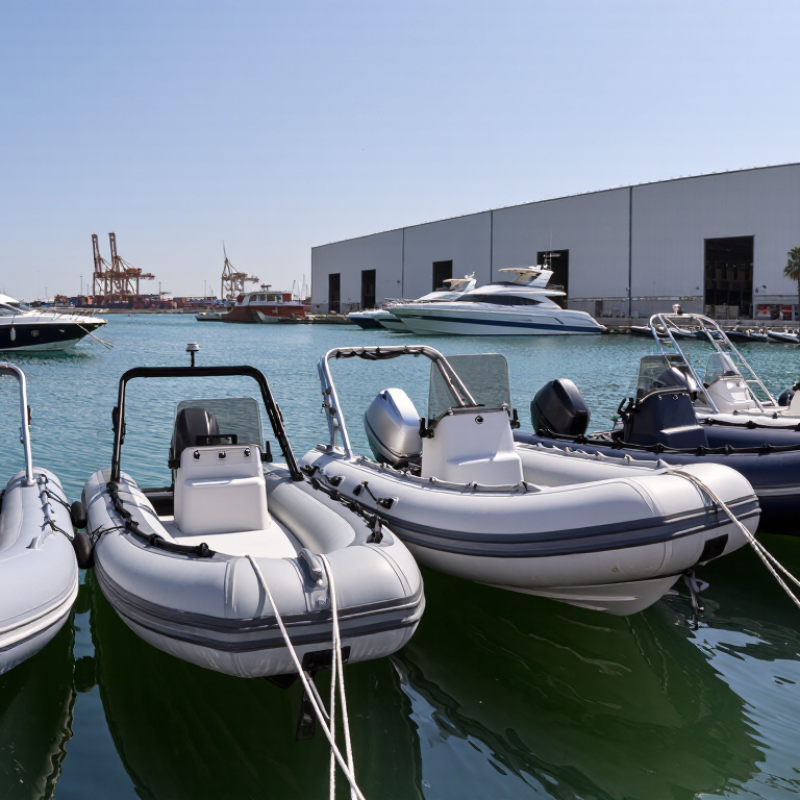
China’s inflatable boat manufacturing industry covers the design, material processing, assembly, testing, and export of inflatable watercraft. It serves fishing, rescue, leisure, transport, and marine inspection. China’s Ministry of Industry and Information Technology reported that national manufacturing value added reached about 31.7 trillion yuan in 2023. Manufacturing also contributed 26.2% of the country’s GDP. These figures show the industrial foundation supporting inflatable boat production.
Production usually combines PVC or Hypalon fabric, heat-welded seams, aluminum or composite floors, valves, engines, and safety equipment. Suppliers can produce both compact tender boats and larger rigid inflatable boats. According to Grand View Research, the global inflatable boats market is expected to grow steadily through 2030. Demand is linked to tourism, coastal services, emergency response, and personal watercraft. Yet market estimates differ because research firms classify products differently. That weakness deserves attention.
Tips: Check fabric thickness, seam quality, valve design, load capacity, and after-sales testing records. Ask for material certificates and sample inspections. A low price can hide thinner fabric or weaker bonding. Field experience matters. Test before scaling orders. China’s role is significant, but quality control remains uneven among smaller workshops. Buyers should compare documented performance, not only catalog photographs.
Chinese inflatable boat manufacturers typically produce several distinct types, each serving a different water-use scenario. PVC dinghies remain popular for yacht tenders, fishing, and short coastal trips. They are light, compact, and economical. Hypalon or CSM boats offer better resistance to sunlight and fuel exposure, but usually cost more. Buyers should check fabric thickness, seam welding, valve quality, and load ratings instead of judging appearance alone.
Rigid inflatable boats, or RIBs, combine inflatable tubes with fiberglass or aluminum hulls. They provide better speed, stability, and handling in choppy water. Chinese factories also make inflatable kayaks, fishing boats, rafting boats, and rescue-oriented models. ISO 6185 provides an important international framework for inflatable boat construction and performance. However, compliance claims still require document checks and sample testing. A certificate should never replace physical inspection.
Market demand remains supported by recreational boating. The 2023 U.S. Recreational Boating Statistical Abstract reported about 11.6 million registered recreational vessels. That figure supports continuing demand for tenders and support boats. In practice, the most useful model is not always the largest one. A 3.3-meter dinghy may suit a marina tender, while a 5-meter RIB needs stronger transport planning and engine support. Some catalog specifications look impressive. Real-world durability can still disappoint. Tube pressure, drain design, storage conditions, and after-sales repair access deserve closer attention.
This chart compares representative overall length ranges commonly associated with major inflatable boat categories. Actual specifications vary by hull design, intended use, payload, and applicable safety standards.
The ranges are indicative industry specifications rather than company-specific product data.
China Top 10 Inflatable Boat Manufacturers: Selection Criteria for China’s Leading Inflatable Boat Companies
Selecting China’s leading inflatable boat manufacturers requires more than comparing catalog prices. NMMA’s 2023 U.S. Recreational Boating Statistical Abstract recorded about 11.6 million registered recreational boats. This demand increases pressure on suppliers to deliver safer, lighter, and more durable products. Buyers should verify fabric weight, coating type, seam construction, valve quality, and load capacity. Small details matter.
Factory evidence matters most. Ask for batch records, pressure-test results, material traceability, and third-party inspection reports. ISO 6185 provides recognized requirements for inflatable boats, including buoyancy and design categories. Compliance should be checked against the intended market, not accepted from a generic certificate. A factory visit can reveal uneven heat welding, weak packaging, or rushed quality checks. Photos can hide these problems.
Independent market studies, including Grand View Research’s inflatable boats analysis, indicate mid-single-digit annual growth in this sector. That growth can attract inexperienced suppliers. Production volume alone is not proof of expertise. Evaluate mold control, sample consistency, after-sales response, spare-part availability, and warranty handling. Request several samples from different batches. One perfect sample proves little. I would also score delivery reliability and corrective-action speed, because these areas are often overlooked during initial sourcing. Forecasts may differ, so purchasing decisions should rely on verified factory data rather than market projections alone.
| Rank | Evaluation Area | Recommended Selection Benchmark | Verification Evidence | Suggested Weight | Why It Matters |
|---|---|---|---|---|---|
| 1 | Manufacturing Experience | At least 10 years of documented inflatable boat production experience | Business registration records, factory history, product archives, and customer references | 15% | Long-term production experience generally indicates established processes and accumulated technical knowledge. |
| 2 | Material Quality | Use of marine-grade PVC, CSM, or Hypalon-type coated fabric with declared specifications | Material technical data sheets, thickness information, supplier certificates, and sample testing | 15% | Fabric selection affects air retention, UV resistance, abrasion resistance, and service life. |
| 3 | Welding and Assembly Technology | Consistent high-frequency, hot-air, or thermoplastic welding with documented process controls | Production videos, welding inspection records, pressure-test reports, and factory audits | 15% | Reliable seams are essential for safety, air retention, and resistance to repeated inflation and deflation. |
| 4 | Product Range | At least three product categories, such as tenders, rescue boats, fishing boats, or RIBs | Current catalogue, dimensional drawings, load data, and available configuration options | 10% | A broader range can indicate stronger engineering capability and better suitability for different applications. |
| 5 | Customization Capability | Ability to customize dimensions, colors, graphics, fittings, flooring, consoles, and packaging | Approved drawings, prototype samples, minimum order requirements, and change-control procedures | 10% | Customization is important for distributors, commercial users, rescue services, and private-label projects. |
| 6 | Safety and Compliance | Relevant compliance documentation for the intended market and application | Declaration of conformity, test reports, user manuals, capacity plates, and applicable marine standards | 12% | Documented compliance supports legal market entry and reduces operational and liability risks. |
| 7 | Quality Control System | Documented incoming-material inspection, in-process checks, final inspection, and pressure testing | Quality manuals, inspection checklists, calibration records, defect reports, and corrective-action records | 10% | A repeatable quality system helps control dimensional accuracy, seam integrity, and shipment consistency. |
| 8 | Production Capacity and Lead Time | Stable production scheduling with clear standard and customized order lead times | Capacity statements, production plans, sample order history, and written lead-time commitments | 6% | Reliable capacity helps buyers avoid delays during seasonal demand and large project deliveries. |
| 9 | Export and Logistics Capability | Experience preparing export documentation and shipping products in protective packaging | Packing specifications, commercial invoices, export references, container-loading procedures, and logistics records | 4% | Correct documentation and packaging reduce customs problems, transit damage, and delivery costs. |
| 10 | Warranty and After-Sales Support | Written warranty terms, replacement-part availability, repair guidance, and responsive technical support | Warranty policy, spare-parts list, service procedure, response-time commitment, and customer references | 3% | After-sales support protects the buyer’s investment and improves long-term product usability. |
| Total Suggested Evaluation Weight | 100% | Use documented evidence rather than catalogue claims when comparing suppliers. | |||
Note: The criteria and weighting are designed for objective supplier comparison. Actual rankings should be based on current factory audits, product samples, compliance documents, quotations, and verified customer references.
China’s leading inflatable boat manufacturers serve rescue teams, anglers, leisure users, and marine operators. Their factories commonly combine PVC or Hypalon-style fabrics with heat welding, reinforced seams, and aluminum or fiberglass floors. Factory experience shows that workmanship matters as much as advertised specifications. A neat valve seat can prevent frustrating leaks.
One manufacturer focuses on compact dinghies for yacht owners. Another produces stable fishing boats with wider tubes. A third specializes in lightweight tenders for easy carrying. The fourth develops rigid inflatable boats for patrol and rescue applications. The fifth offers custom colors, seating, and console layouts.
The sixth emphasizes high-pressure drop-stitch floors. The seventh builds family-sized boats with improved interior space. The eighth supplies inflatable kayaks and small recreational craft. The ninth focuses on OEM production and flexible packaging. The tenth manufactures heavy-duty boats for frequent commercial use.
These profiles should not be judged by catalog images alone. Buyers should inspect weld consistency, fabric thickness, valve quality, and transom reinforcement. Ask for load tests and recent production samples. Factory audits can reveal storage problems, rushed finishing, or weak quality control. Certifications are useful, but they do not replace practical inspection. Some suppliers communicate clearly before payment, yet after-sales support may feel less consistent. That deserves attention. A careful buyer should compare repair guidance, spare valves, warranty terms, and delivery records before choosing a long-term manufacturing partner.
China’s top 10 inflatable boat manufacturers compete through quality, customization, and export readiness. In practical inspections, fabric thickness, seam bonding, valve strength, and air retention deserve close attention. A boat should remain firm after several hours, not only during a showroom demonstration. Drop-stitch floors and reinforced transoms improve stability for fishing, rescue support, and leisure use. However, attractive specifications can hide inconsistent workmanship. Buyers should request production samples and independent test records.
Customization is now a major advantage for overseas distributors. Manufacturers may adjust tube diameter, floor structure, color, logo placement, seating, and packaging. Export experience also matters. Reliable suppliers understand container loading, documentation, regional certifications, and after-sales communication. Market preferences differ. European buyers may prioritize compact storage, while tropical markets often need stronger UV protection. These differences affect cost and delivery time. Sometimes, the cheapest quotation creates expensive revisions later.
Tips: Ask for material certificates, seam-test results, and clear warranty terms. Compare samples from several factories under the same conditions. Check how replacement parts are packed. Do not trust photos alone. Current industry trends include lighter boats, modular accessories, electric propulsion compatibility, and recyclable materials. Some claims remain difficult to verify, especially around sustainability. A careful buyer should question them politely. Even experienced importers can overlook small details, such as valve compatibility or carton moisture protection.
This website uses cookies to ensure you get the best experience possible. Learn more.