Why Choose the Right Fish Hook for Global Sourcing?
Choosing the right Fish Hook is a commercial decision, not merely a tackle preference. It affects catch performance, product reviews, repeat orders, and brand credibility. A hook may look polished under bright showroom lights, yet fail after repeated contact with saltwater. That difference can damage an entire sourcing program.
Kevin VanDam, a respected professional angler and fishing industry authority, has emphasized, “A sharp hook is the most important part of any lure.” The principle is simple, but global sourcing makes it more demanding. Buyers must evaluate carbon steel, stainless steel, coating quality, point geometry, barb design, and production consistency. Small differences matter. A slightly weak bend can open during a hard strike. Uneven points can reduce penetration. Poor packaging can create rust before the shipment reaches the warehouse.
Reliable suppliers should provide material details, inspection records, sample approvals, and clear production tolerances. Independent testing can also confirm hardness, corrosion resistance, and tensile strength. These steps support responsible purchasing and reduce avoidable quality disputes across borders. They also help buyers compare total value, rather than choosing the lowest unit price.
The process is not perfect. Specifications can miss real fishing conditions. Laboratory results cannot fully reproduce a rocky shoreline, muddy river, or repeated casting. That is why experienced buyers should test samples in realistic environments. Ask difficult questions. Review failures honestly.
The right Fish Hook combines dependable engineering, suitable application, and stable supply performance. It should protect the angler’s confidence and the importer’s reputation. A cheaper hook is not always cheaper. Sometimes, it simply postpones the cost.
What Makes Fish Hook Selection Important in Global Sourcing?
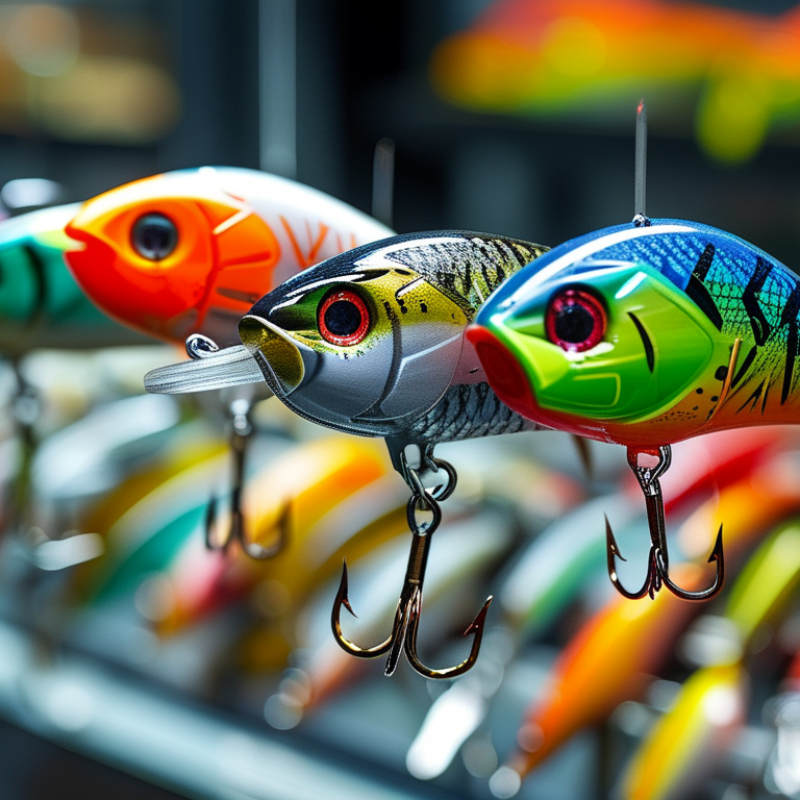
Selecting a fish hook is not a minor purchasing detail in global sourcing. It affects product safety, fishing performance, customer trust, and shipment consistency. In my sourcing experience, a hook that looks excellent in a sample can fail during mass production. Small changes in wire diameter matter.
Hook size, point sharpness, bend shape, and tensile strength should match the intended fishing method. A freshwater hook may not suit saltwater exposure. Coatings also deserve attention. Poor corrosion resistance can leave dark spots after weeks in humid storage. That damage is easy to miss during a short inspection.
Reliable buyers request material specifications, dimensional drawings, and batch testing records. They should also check packaging quality, traceability, and labeling requirements for each destination market. A factory’s polished sample is not enough evidence. Independent inspections can reveal inconsistent tempering or uneven points. They add cost, but rushed replacements cost more. I have seen teams overvalue low prices and ignore failure rates. That choice looked efficient on paper. It was not. Even experienced sourcing staff can miss regional requirements, so technical review and documented communication remain necessary.
| Selection Dimension | Relevant Data or Specification | Why It Matters in Global Sourcing | Recommended Verification Method |
|---|---|---|---|
| Hook Size | Common designations include sizes such as 10, 6, 2, 1/0, and 4/0. In the traditional numbering system, sizes from 1 to 20 generally become smaller as the number increases, while “/0” sizes become larger as the number increases. | Size affects bait presentation, target-fish suitability, packaging configuration, and regional product specifications. Incorrect sizing can reduce catch performance and increase returns. | Approve a technical drawing or approved sample showing overall length, gap, wire diameter, eye dimensions, and point position. Do not rely on size notation alone because sizing is not fully standardized across all manufacturers. |
| Hook Pattern | Common patterns include round bend, wide gap, octopus, baitholder, circle, treble, and long shank designs. | The pattern influences bait holding, hook-setting behavior, fish retention, snag risk, and suitability for freshwater, saltwater, lure, or live-bait applications. | Compare the bend radius, shank length, gap width, eye orientation, and point alignment against a signed-off master sample. |
| Base Material | Hooks are commonly produced from high-carbon steel, alloy steel, or stainless steel. High-carbon steel supports hardness and strength; stainless steel generally provides better corrosion resistance but is not corrosion-proof. | Material selection affects tensile performance, point retention, corrosion behavior, cost, and suitability for long-distance sea freight or humid storage environments. | Request material declarations and conduct hardness, tensile-load, dimensional, and corrosion checks according to the agreed product specification. |
| Surface Finish | Typical finishes include black, bronze, nickel, tin, and other protective or decorative coatings. Coating thickness and adhesion vary by process. | A suitable finish helps control corrosion, appearance, friction during penetration, and shelf life. Poor coating adhesion may lead to flaking or early rust. | Inspect coating uniformity, check for exposed steel, perform adhesion checks, and use a defined salt-spray or humidity test when the application requires corrosion resistance. |
| Point Design | Common point styles include needle, conical, hollow-ground, and knife-edge points. Some products use chemically sharpened or mechanically sharpened points. | Point geometry affects penetration force, hook-setting reliability, packaging safety, and the ability to maintain sharpness during use. | Use visual inspection, point-alignment checks, penetration testing, and a controlled sharpness test with an agreed acceptance limit. |
| Barb Configuration | Hooks may be barbed, barbless, micro-barbed, or manufactured with multiple barbs on the shank for bait retention. | Barb configuration affects fish retention, release requirements, user safety, and compliance with local fishing regulations, which can vary by fishery and location. | Specify barb height, position, and number in the drawing. Confirm the requirements of the destination market and conduct dimensional sampling. |
| Wire Diameter | Light-wire designs reduce weight and can improve bait presentation; heavier-wire designs provide greater resistance to bending under load. | Wire diameter affects strength-to-weight ratio, lure balance, penetration, package weight, and freight cost. A visually similar hook may perform differently if the wire gauge changes. | Measure wire diameter at multiple locations using calibrated equipment and perform load testing on samples from each production lot. |
| Eye Style | Common eye styles include turned-up, turned-down, straight, looped, and welded or non-welded eyes. | The eye influences knot compatibility, lure attachment, line alignment, snag risk, and the mechanical security of the connection. | Check eye opening, orientation, weld quality where applicable, and compatibility with the specified line, split ring, or leader system. |
| Strength and Deformation | Important performance indicators include tensile strength, point pull-out resistance, opening force, and permanent deformation after loading. | Consistent mechanical performance reduces field failures, safety complaints, and costly replacement programs across different sourcing batches. | Define the test method, loading direction, sample quantity, maximum permitted deformation, and rejection criteria before production approval. |
| Corrosion Resistance | Risk increases with salt exposure, high humidity, condensation, acidic packaging materials, and long storage periods. Stainless steel and protective coatings can reduce risk but require validation. | Global supply chains may include ocean transport, port storage, and multiple climate zones. Corrosion discovered at destination can create significant sorting and rework costs. | Use climate-appropriate packaging, desiccant where suitable, corrosion inspection, and an agreed accelerated corrosion test. Record test conditions and duration. |
| Manufacturing Consistency | Key control points include stamping or forming accuracy, heat treatment, grinding, coating, eye forming, barb forming, and final sharpening. | Consistent production is essential when purchasing from multiple facilities or replenishing the same specification over time. | Use pre-production samples, first-article approval, an inspection checklist, statistical sampling, and lot traceability based on production date or batch code. |
| Packaging and Shipment | Packaging should prevent point damage, tangling, moisture exposure, coating abrasion, and mixed-size inventory. Carton quantity and unit weight should be defined. | Well-designed packaging protects product quality during international handling and improves warehouse counting, customs documentation, and transport-cost planning. | Approve inner and outer packaging samples, perform drop and moisture-resistance checks where appropriate, and verify carton marks against shipping documents. |
| Regulatory and Market Fit | Requirements may differ by destination, fishery, protected species, hook type, barb design, packaging language, and product-safety rules. | A technically strong hook may still be unsuitable for a target market if its design or labeling conflicts with local fishing regulations or import requirements. | Review destination-country regulations, tariff classification, labeling needs, restricted-material requirements, and customer-specific specifications before placing the order. |
| Overall Sourcing Priority | Performance + Compliance + Consistency | The lowest unit price is not necessarily the lowest total cost. A correct hook specification can reduce defects, freight waste, field failures, claims, and repeat inspection expenses. | Evaluate suppliers using a weighted scorecard covering technical capability, quality history, testing capacity, lead time, packaging, traceability, and total landed cost. |
This website uses cookies to ensure you get the best experience possible. Learn more.