How to Choose the Best Pool Float in 2026?

Choosing the best Pool Flot in 2026 requires more than bright colors and attractive photographs. It requires evidence.

Grand View Research’s swimming pool equipment market analysis identifies durability, product innovation, and changing consumer preferences as important growth factors. That matters at the water’s edge. A float should match the swimmer’s weight, body size, water conditions, and intended activity. Check the manufacturer’s capacity rating. Inspect seams, handles, valves, and air retention before every use. A slow leak can become dangerous quickly. Especially for children.

Safety must remain separate from comfort. The U.S. Consumer Product Safety Commission’s Pool Safely guidance warns that inflatable toys are not personal flotation devices. The CDC also identifies drowning as a leading cause of unintentional death for young children. Michele Hlavsa, former chief of the CDC’s Healthy Swimming Program, has said, “There is no substitute for close, constant, and capable supervision.” That sentence should guide every purchasing decision.

In practical terms, choose a stable, well-supported design for relaxed floating. Select thicker, repairable materials for frequent use. Look for clear warnings, age guidance, and independently tested construction. Avoid assuming a higher price guarantees better safety. It does not always.

The imperfect part is personal preference. A wide lounger may feel secure, yet become awkward in wind. A compact ring may store easily, yet offer limited support. I would test the float briefly in shallow water first. Then I would reassess comfort, stability, and control. The best Pool Flot is not merely attractive. It fits the user, the setting, and the responsibility surrounding every swim.
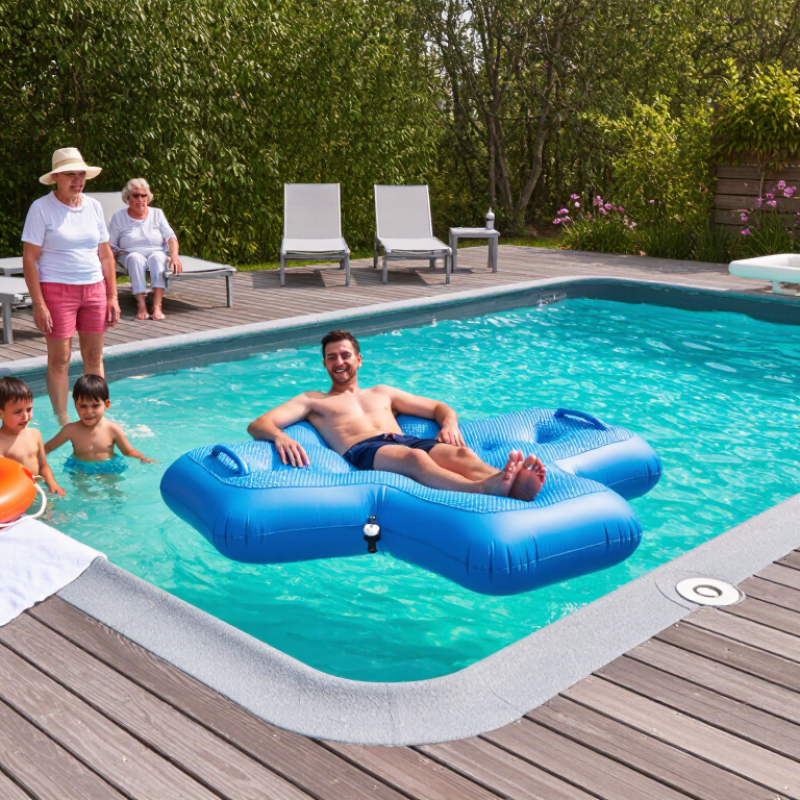
How to Choose the Best Pool Float in 2026?

Define the Use Case: Relaxation, Play, Fitness, or Open-Water Floating

How to Choose the Best Pool Float in 2026?

The right float starts with the activity, not its color or cup holder. For relaxation, choose a stable, supportive shape with a headrest and easy drainage. The 2024 Global Wellness Economy Monitor valued the global wellness economy at $6.3 trillion in 2023. That growth reflects demand for recovery and leisure, but it does not make every float comfortable. I used to overlook neck support. That was a mistake. Check your posture after ten minutes.

Play needs quicker movement and safer handling. Pick a compact float that is easy to grip, turn, and retrieve. Avoid oversized designs around crowded swimmers. The CDC identifies drowning as a leading cause of death for young children. A float is not a rescue device. This point is easy to forget.

Fitness changes the test. Look for stable handholds, moderate resistance, and enough space for full leg movement. WHO guidelines recommend 150–300 minutes of moderate activity weekly, but a float alone cannot provide effective training.

For open-water floating, prioritize visibility, attachment points, and a low wind profile. The U.S. Coast Guard recorded 3,844 recreational boating accidents and 564 deaths in 2023. Open water is not a larger pool. Recheck weather, currents, and local conditions before entering.

Match User Weight to Manufacturer Buoyancy and Load-Capacity Data

How to Choose the Best Pool Float in 2026?

Choosing a pool float starts with your actual body weight, not its color or shape. Check the manufacturer’s buoyancy rating and maximum load capacity before buying. These figures are different. Buoyancy describes floating support, while load capacity describes the recommended total weight. That total may include clothing, water, and attached accessories.

Use a simple safety margin. If you weigh 80 kilograms, avoid a float rated for only 80 kilograms. A capacity near 100 kilograms gives better stability, especially when entering, turning, or reaching for a drink. Test the figures against your intended use. A calm pool requires less control than a float used near strong jets or frequent movement.

Fit matters too. Your shoulders should remain supported, and your hips should not sink below the waterline. The material should feel firm without sharp seams or weak valves.

I once trusted a generous capacity label and ignored the narrow base. It floated well but tilted whenever I shifted my weight. That mistake changed how I compare products.

Read the full specifications, including inflated dimensions and recommended user type. Children, older adults, and people with limited mobility may need more stability than a basic capacity number shows. A float is not a substitute for supervision or swimming ability. Manufacturer data helps, but real comfort and balance still require careful judgment.

Check PVC Construction, Seams, and EN 15649 Safety Requirements

How to Choose the Best Pool Float in 2026?

Check PVC construction before judging a float’s shape or color. Look for thick, flexible PVC with even surfaces and no cloudy stress marks. Reinforced areas should feel firm, not brittle. Heat-welded seams usually provide better consistency than poorly bonded edges. Run your fingers around every joint. Raised ridges, pinholes, or sticky residue deserve caution. Check that valves close fully and remain attached after inflation.

EN 15649 covers floating leisure articles used on or in water. It addresses construction, buoyancy, warnings, and foreseeable misuse. Ask sellers for documentation showing the relevant standard parts, not vague claims about being “safe.” The World Health Organization’s 2024 drowning report estimates 236,000 global drowning deaths annually. The U.S. Consumer Product Safety Commission has also reported hundreds of fatal child drownings in pools and spas each year. A float is not a rescue device. Supervision still matters.

Inflate the product firmly, then leave it overnight on a clean surface. Measure any visible softening the next morning. Inspect seams again, especially near handles and air chambers. A small leak may remain invisible during a quick shop test. That is the part many buyers miss. EN 15649 compliance cannot replace careful inspection, correct use, and constant attention around water.

How to Choose the Best Pool Float in 2026? — Check PVC Construction, Seams, and EN 15649 Safety Requirements
Evaluation Dimension What to Check Reliable Selection Benchmark Warning Signs Practical Buying Decision
Product Classification Confirm whether the product is an inflatable floating leisure article intended for use on or in water. Look for clear product instructions, intended-use information, and a reference to the applicable EN 15649 requirements where relevant. Do not treat a pool float as a life-saving device or substitute for a certified life jacket. Choose a product whose stated use matches the pool activity, user size, and water environment.
PVC Construction Inspect the PVC film for consistent thickness, smooth surfaces, and complete coverage around load-bearing areas. The material should be free from pinholes, brittle patches, sharp edges, strong persistent solvent odor, and visible surface cracking. Avoid uneven film, exposed reinforcement, peeling coatings, or areas that become white and brittle when flexed. Prioritize uniform construction over decorative graphics or unusually low price.
Material Information Review the packaging or instructions for material details, care limits, and chemical-use guidance. Clear information should identify the product, provide use instructions, and explain storage and cleaning requirements. A stated PVC thickness alone does not prove durability; there is no single universal thickness that guarantees safety for every float design. Compare the complete construction and instructions rather than selecting only by thickness.
Heat-Welded or Bonded Seams Examine longitudinal seams, perimeter seams, seat joints, and attachment points under normal light. Seams should be continuous, even, fully bonded, and free from lifting edges, wrinkles, gaps, or incomplete welds. Reject visible bubbles, open corners, adhesive residue at a joint, or a seam that separates during gentle inspection. Seam quality is often more important than the printed pattern because leakage commonly starts at joints.
Valves and Closures Check that every inflation valve has a secure cap, a retained plug where applicable, and a smooth sealing surface. The valve should remain closed during use and should not leak during inflation, deflation, or ordinary movement. Avoid loose valve bodies, damaged caps, difficult-to-close plugs, or air escaping around the valve base. Inflate and inspect the valve area before use, especially after the product has been stored for a long period.
Air Retention Inflate the float to the manufacturer’s stated firmness and check for gradual loss of pressure. The float should remain stable and properly shaped after a reasonable observation period at the intended temperature. Do not use a float that becomes visibly soft, changes shape, or develops a new bulge or crease after inflation. Never exceed the manufacturer’s inflation instructions; overinflation can stress seams and valves.
Buoyancy and Stability Assess how the float supports the intended user position and how easily it rolls, tips, or submerges. The product should provide predictable support for its stated user group when used in calm water and within its load guidance. Avoid unstable designs for users who cannot swim, products with unclear load limits, or floats that tilt sharply during normal entry. Test stability in shallow water first and keep the user within arm’s reach of responsible supervision.
Load and User Limits Check the maximum user weight, number of users, recommended age range, and any height or activity limits. Limits should be clearly stated and easy to locate on the product, packaging, or instructions. Do not infer capacity from the product’s physical size or assume that two single-user floats can safely support two people together. Choose a capacity with a sensible margin below the stated maximum, particularly for active use.
Handles and Attachments Inspect handles, ropes, seats, backrests, and their attachment patches for secure integration with the main body. Attachment points should be reinforced, evenly bonded, and free from tearing, sharp edges, or exposed hardware. Avoid handles that pull away from the patch, thin unsupported attachment tabs, or cords that can create entanglement hazards. Use handles only for their stated purpose; they are not automatically designed for towing or lifting a person.
EN 15649 Safety Information Look for understandable warnings, instructions for use, inflation guidance, maintenance information, and limitations of use. Relevant EN 15649 requirements address floating leisure articles, including safety-related design, performance, marking, and user information aspects across its applicable parts. Avoid products with missing warnings, unreadable labels, incomplete instructions, or claims that imply life-saving protection. Use EN 15649 conformity information as one part of the assessment, together with physical inspection and correct supervision.
Markings and Traceability Check for durable product identification, manufacturer or responsible economic operator information, batch or model details, and instructions. Markings should remain legible after normal handling and should correspond with the supplied instructions. Be cautious when essential safety information appears only on temporary packaging or is printed too faintly to read. Keep the instructions and product identification for future reference, warranty questions, or safety notices.
Chemical and Environmental Care Review cleaning instructions and limits related to chlorine, salt water, sunlight, heat, and sharp pool surfaces. Follow the specified cleaning and storage method; rinse after use when recommended and dry completely before storage. Avoid prolonged exposure to direct sun, hot surfaces, oils, solvents, and abrasive pool edges. Store deflated or as instructed, away from heat and sharp objects, without placing heavy items on top.
Final Pre-Use Inspection Check the body, seams, valves, attachment points, warnings, and inflation level every time before use. Use only when the float is fully intact, correctly inflated, and operated within the stated conditions. Remove from service after a failed seam, persistent leak, major deformation, deep cut, or damaged valve. When in doubt, replace the product rather than attempting an unverified repair on a load-bearing area.
Safety reminder: A pool float is a recreational floating article, not personal protective equipment or a life-saving device. Follow the product instructions, observe the stated limits, and maintain active, close supervision of children and non-swimmers.

Evaluate Stability Through Dimensions, Air Chambers, and Inflation Pressure

How to Choose the Best Pool Float in 2026?

Stability starts with dimensions, not bright colors or thick-looking material. A wider float usually resists rolling, especially when you shift your shoulders or bend one knee. Measure the usable surface, not only the package length. A long float can still feel narrow around your hips. For adults, I look for enough width to keep both elbows supported without gripping the sides. Smaller users may prefer a compact design that responds less dramatically to movement. This is a practical test, not a perfect rule.

Air chambers add another layer of security. Separate chambers can limit deflation if one section loses air, although they do not make a float unsinkable. Check that each valve closes firmly and does not leak after inflation. Inflate the chambers evenly. Uneven pressure can twist the surface and make your body slide toward one edge. Use the stated inflation guidance rather than guessing by touch. A very hard float is not always a safer float. Heat can expand trapped air, while cooler water can reduce pressure. I test the float in shallow water first, then adjust it after several minutes. It sometimes feels stable on land but tilts in the pool. That detail is easy to miss. Examine seams, valves, and chamber connections before every use, and follow the product’s weight limits and supervision instructions.

Confirm CPSC Labels, ASTM Testing, Warranty Terms, and Safety Warnings

How to Choose the Best Pool Float in 2026?

A pool float should pass a label check before it passes a comfort test. For children’s products, look for the manufacturer or importer, tracking information, age guidance, and required CPSC certification details. A CPSC logo alone proves little. CPSC Pool Safely data reports an average of 371 fatal child drownings in pools and spas each year from 2020 to 2022. It also reports about 6,500 annual emergency-department treatments for nonfatal drowning injuries among children. A bright float is not a safety device. Never treat it as one.

Ask for evidence of testing against the applicable ASTM aquatic-device standard, such as ASTM F2287, rather than accepting “ASTM tested” on packaging. The report should identify the exact model, materials, test date, and laboratory. Check seams, handles, valves, and weight limits at home. A slow leak may be easy to miss. Read every warning near the inflation valve, especially instructions about supervision, wind, currents, and use outside deep water.

Warranty terms reveal practical reliability. Confirm coverage length, proof-of-purchase rules, repair options, and exclusions for punctures or sunlight damage. The CDC continues to identify lack of supervision as a major drowning risk, so a warranty cannot replace an adult within arm’s reach. I used to focus on thickness and color first. That was a poor shortcut. The paperwork often tells more.

Article Source:

This website uses cookies to ensure you get the best experience possible. Learn more.