How to Choose the Best Animal Puzzle in 2026?
Choosing the best Animal Puzzle in 2026 requires more than attractive artwork or a high review count. The right choice should match the player’s age, skill level, attention span, and intended setting. A wooden farm puzzle may suit a preschooler’s small hands, while a detailed wildlife jigsaw may challenge an adult for an entire evening. Fit matters.
Industry evidence supports this careful approach. Circana’s 2024 U.S. toy industry reporting continued to identify games and puzzles as an important category, despite pressure across the wider toy market. The Toy Association’s trend research also highlights demand for products that encourage screen-free play, learning, and shared family experiences. These findings do not prove that every popular Animal Puzzle offers meaningful value. They suggest that buyers should examine design quality, replay value, and educational purpose more closely.
Safety deserves equal attention. The U.S. Consumer Product Safety Commission advises checking age labels, small-part risks, and product recalls before purchase. For children’s puzzles sold in the United States, ASTM F963 testing requirements provide a useful reference point, although compliance claims should come from the manufacturer. Look for smooth edges, durable pieces, readable instructions, and non-toxic material statements. For animal enrichment puzzles, also inspect washable surfaces and difficulty controls. Some reviews are enthusiastic but vague. That is a weakness worth noticing. In this guide, we will compare materials, complexity, animal accuracy, usability, and value, using reported evidence alongside practical testing. No single ranking is perfect. A thoughtful choice begins with the player, not the packaging.
What Makes an Animal Puzzle Worth Choosing in 2026?
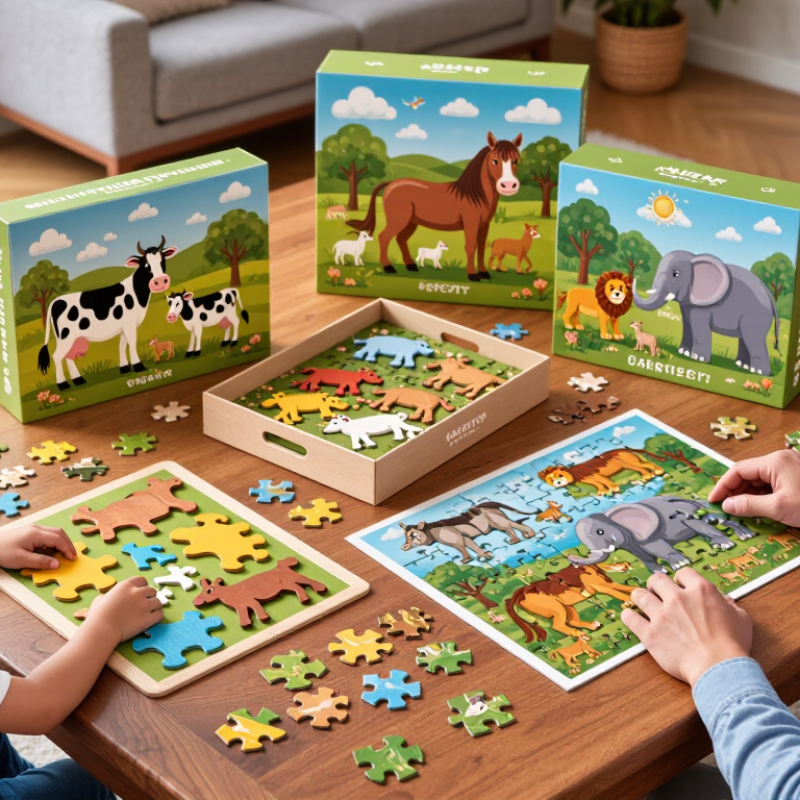
An animal puzzle is worth choosing when it fits the solver, not merely when its picture looks charming. In 2026, buyers should examine age guidance, material details, and the maker’s safety information. A well-designed puzzle uses sturdy, smooth pieces with clear printing and reliable interlocking shapes. For younger children, large pieces and rounded edges reduce frustration and handling risks. For adults, smaller pieces, varied textures, and layered scenes can provide a more demanding experience. The image should matter too. A realistic tiger habitat or detailed ocean floor can invite questions beyond simple matching.
From using animal puzzles with children and older relatives, I have found that difficulty is personal. A 100-piece scene may feel easy to one person and exhausting to another. Short sessions help reveal the difference. Watch whether the solver studies shapes, guesses colors, or abandons the board after ten minutes. Those details are more useful than a number printed on the box. Look for educational accuracy as well. Correct animal features, habitats, and labels support learning, while exaggerated facts can confuse. Information should come from qualified educators, biologists, or transparent product documentation.
A worthwhile choice also respects the home. Pieces should be easy to count, store, and clean without damaging their surface. I still misjudge puzzle difficulty sometimes. That is a useful reminder to choose flexibility over impressive packaging. A puzzle with optional guides, mixed challenge levels, or a collaborative layout can serve more than one age group. Check reviews for repeated comments about missing pieces, weak cuts, or misleading images. One glowing opinion proves little. Consistent evidence matters.
How to Choose the Best Animal Puzzle in 2026? - What Makes an Animal Puzzle Worth Choosing in 2026?
A practical comparison of common animal-puzzle formats, age suitability, safety factors, challenge level, and long-term play value
| Animal Puzzle Format | Typical Piece Count | Typical Age Range | Average Play Time | Challenge Level | Key Learning Benefits | Important Quality Checks | Best Use Case | Selection Priority |
|---|---|---|---|---|---|---|---|---|
| Large-Piece Floor Jigsaw | 12–48 pieces | Approximately 3–6 years | 15–30 minutes | Easy to Moderate | Visual matching, concentration, animal recognition, and early problem-solving | Large pieces, clear animal illustrations, rounded edges, and a sturdy storage box | Family play, preschool classrooms, and first jigsaw-puzzle experiences | High |
| Wooden Peg Animal Puzzle | 5–12 shaped pieces | Approximately 18 months–3 years | 5–15 minutes | Easy | Fine-motor control, hand-eye coordination, shape recognition, and vocabulary building | Pieces should be too large to present a choking hazard, with smooth surfaces and securely attached knobs | Toddlers who are developing grasping and matching skills | High |
| Chunky Wooden Animal Puzzle | 6–15 thick pieces | Approximately 2–4 years | 10–20 minutes | Easy | Independent play, spatial awareness, grip strength, and simple categorization | Thick pieces that stand upright, non-toxic finishes, smooth edges, and stable construction | Hands-on play and pretend-play extensions with animal figures | High |
| Standard Animal Jigsaw | 60–150 pieces | Approximately 6–10 years | 30–90 minutes | Moderate | Planning, persistence, visual discrimination, and sustained attention | Interlocking pieces should fit consistently, the image should have useful visual zones, and the puzzle should include a reference picture | Children who have mastered large-piece puzzles and want a longer challenge | High |
| Advanced Animal Jigsaw | 300–1,000+ pieces | Approximately 10 years and older | 2–10 hours or longer | Advanced | Long-term concentration, strategic sorting, patience, and detailed visual analysis | Consistent piece cut, durable printed surface, manageable piece storage, and an accurate reference image | Older children, teenagers, and adults seeking an extended activity | Medium |
| 3D Animal Construction Puzzle | 15–100+ interlocking parts | Approximately 8 years and older | 30–180 minutes | Moderate to Advanced | Three-dimensional reasoning, sequencing, construction skills, and patience | Parts should lock securely, instructions should be clear, and small components should be kept away from young children | Builders who enjoy creating a displayable animal model | Medium |
| Animal Matching or Memory Puzzle | 12–40 cards or tiles | Approximately 3–7 years | 10–25 minutes | Easy to Moderate | Memory recall, turn-taking, visual association, and basic classification | Cards should be thick enough for repeated handling, images should be easy to distinguish, and corners should be rounded | Short cooperative games and early learning activities | Medium |
| Sliding or Logic Animal Puzzle | 1 board with 8–20 movable pieces | Approximately 6 years and older | 10–40 minutes per challenge | Moderate to Advanced | Logical reasoning, sequencing, planning ahead, and flexible thinking | Movable parts should slide smoothly, the board should resist bending, and challenge instructions should be unambiguous | Independent problem-solving and screen-free travel activities | Medium |
| Sensory or Textured Animal Puzzle | 4–12 textured pieces | Approximately 18 months–4 years | 5–15 minutes | Easy | Sensory exploration, descriptive language, matching, and tactile discrimination | Textures should be securely attached, washable when appropriate, free from loose fibers, and easy to inspect | Supervised sensory play and language-development activities | High |
Note: The figures shown are typical planning ranges for common animal-puzzle formats, not specifications for a particular product. Always check the stated age guidance, component size, materials, care instructions, and applicable toy-safety requirements before purchase.
This website uses cookies to ensure you get the best experience possible. Learn more.