China Top 10 BSA Threaded Bottom Bracket Manufacturers
Choosing a reliable bsa threaded bottom bracket manufacturer requires more than comparing prices. Frame compatibility, bearing quality, sealing, spindle fit, and production consistency all matter.
This guide examines ten China-based manufacturers connected with bsa threaded bottom bracket production. It considers product range, machining capability, quality-control procedures, export experience, customization support, and communication reliability. These factors can affect every stage, from a sample order to long-term supply.
Small details often reveal manufacturing discipline. A clean thread profile should engage smoothly without forcing the tool. Bearings should rotate evenly, without rough spots or excessive side play. Seals must also resist dust and water during practical riding conditions. These checks sound basic. They are easy to overlook.
The selection is intended as a useful starting point, not an unquestionable ranking. Supplier information can change, and public claims do not always prove factory performance. Buyers should verify certifications, inspect samples, confirm tolerances, and discuss warranty handling before placing large orders. A factory may offer attractive catalog photos yet struggle with consistent batch quality. That possibility deserves attention.
Where available, this overview emphasizes observable capabilities and buyer-relevant evidence rather than promotional language. It also recognizes that one manufacturer may suit an OEM bicycle brand, while another fits a distributor seeking standard replacement parts. Experienced sourcing teams should compare material specifications, testing records, packaging protection, lead times, and after-sales responses. Careful verification remains essential.
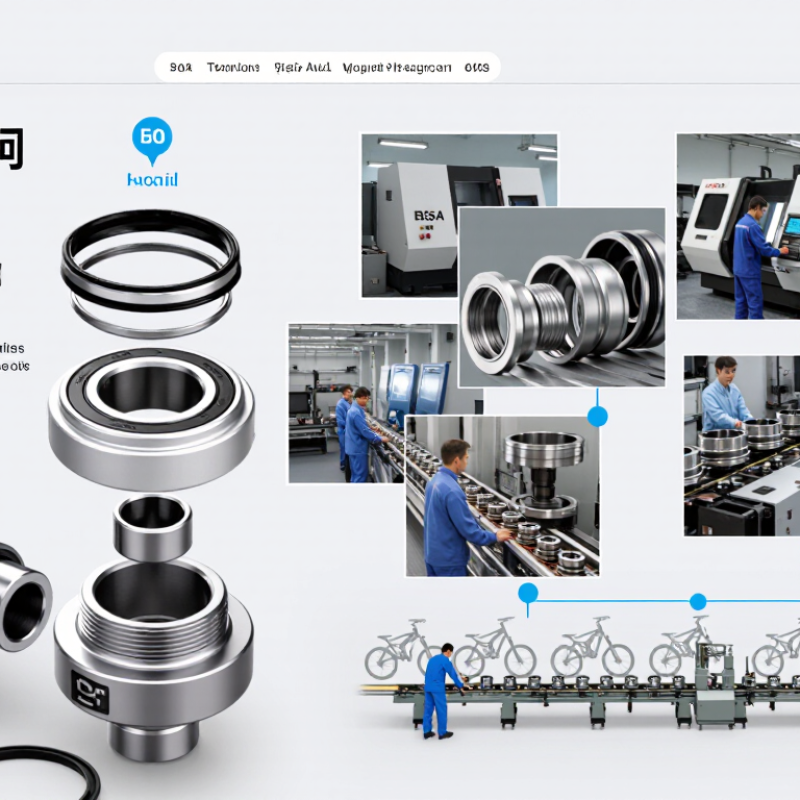
BSA Threaded Bottom Brackets: Design, Standards, and Applications
BSA threaded bottom brackets remain practical because their design is simple, serviceable, and widely understood. The standard usually uses a 1.37 x 24 TPI thread. Most shells measure 68 or 73 millimeters, while some bicycles use wider shells for stronger frames or special drivetrains. The drive-side cup normally has a left-hand thread. The non-drive side uses a right-hand thread. This arrangement helps resist loosening during pedaling.
A reliable bottom bracket needs more than correct dimensions. Sealed cartridge bearings protect against dust, water, and road grit. External bearing systems can improve stiffness, but they demand careful alignment and preload control. Spacers must match the crankset and shell width exactly. Even a small error can create side play or excessive drag. I have seen installation problems caused by paint inside the shell threads. Cleaning and facing the shell often matter more than expensive components.
Applications vary from lightweight road bicycles to mountain, touring, and cargo bikes. Road models may prioritize low friction and reduced weight. Mountain and cargo bicycles usually need stronger seals and greater load tolerance. Manufacturing quality depends on thread gauges, shell-width inspection, bearing tests, and controlled torque checks. A practical weakness remains: published compatibility charts are sometimes unclear. Measuring the frame directly is safer than trusting a photograph or an old parts label. A careful fitting process still prevents many avoidable failures.
| No. | Bottom Bracket Configuration | Typical Shell Width | BSA Thread Standard | Spindle or Interface | Common Bearing Arrangement | Typical Applications and Design Notes |
|---|---|---|---|---|---|---|
| 1 | Square-Taper Cartridge | 68 mm or 73 mm | 1.37 × 24 TPI; right-hand drive-side cup uses a left-hand thread | JIS or ISO square taper | Sealed cartridge bearings | Common on city bikes, touring bicycles, utility bicycles, and entry-level mountain bikes. Compact, economical, and simple to service. |
| 2 | Two-Piece External-Cup System | 68 mm or 73 mm | BSA threaded shell; external cups increase bearing spacing | 24 mm integrated spindle | Two external sealed bearings | Used on many road, hybrid, and mountain bicycles. The external bearing layout supports a wider stance and a relatively stiff crank interface. |
| 3 | Hollow-Spindle Mountain System | 68 mm, 73 mm, or 83 mm | BSA 1.37 × 24 TPI shell threading | 24 mm hollow spindle or equivalent proprietary interface | External sealed bearings with spacers | Designed for mountain-bike cranksets. Spacer selection depends on shell width, crank design, chainline, and whether a chain device is installed. |
| 4 | 30 mm Spindle Threaded Unit | 68 mm or 73 mm | BSA threaded cups installed into a standard English-threaded shell | 30 mm aluminum or steel spindle | Large-diameter sealed bearings | Offers a larger spindle diameter for increased crank stiffness. Careful bearing sealing and internal clearance are important because threaded shells have limited outer diameter. |
| 5 | Press-Fit Adapter for Threaded Shells | 68 mm or 73 mm BSA shell | Uses a threaded external body with an internal press-fit bearing or adapter structure | 24 mm, 29 mm, or 30 mm spindle, depending on the crankset | Replaceable cartridge bearings | Allows a threaded frame to accept selected crank interfaces. Correct cup width, spacer placement, and spindle clearance must be verified before installation. |
| 6 | Fat-Bike Threaded Bottom Bracket | 100 mm or 120 mm | BSA threading; shell width is wider than standard road and mountain formats | Extended spindle for wide chainline | Sealed bearings with width-specific spacers | Used with wide tire and wide chainstay frames. Chainline, crank offset, Q-factor, and spindle length must match the complete drivetrain. |
| 7 | E-Bike Torque-Ready Cartridge | 68 mm, 73 mm, or 83 mm | Standard BSA 1.37 × 24 TPI shell threading | Square taper or splined spindle, depending on the drive system | High-load sealed cartridge bearings | Suitable for pedal-assist bicycles when the frame and drive unit are designed for a threaded bottom bracket. Bearing load rating and sealing are key selection factors. |
| 8 | Track and Fixed-Gear Cartridge | 68 mm is common | BSA threaded shell; drive-side cup is tightened against a left-hand thread | Square taper or track-specific spindle | Sealed cartridge bearings | Used on track-style, fixed-gear, and urban bicycles. The spindle and crankset must provide suitable chainline and clearance for fixed drivetrains. |
| 9 | Tapered-Spindle Service Unit | 68 mm, 73 mm, or 83 mm | BSA threaded shell with replaceable or integrated cups | JIS square taper or compatible tapered spindle | Replaceable loose-ball, cartridge, or hybrid bearing system | Designed for serviceability and replacement of wear components. It is important to match spindle length, taper specification, cup thread, and shell width. |
| 10 | Premium Sealed-Bearing Road Unit | 68 mm | BSA 1.37 × 24 TPI; drive-side thread is left-hand to resist loosening | 24 mm, 29 mm, or 30 mm spindle interface | Low-friction sealed cartridge bearings | Intended for road, gravel, and endurance bicycles. Lightweight alloy cups, corrosion-resistant bearings, and precise preload adjustment are common design priorities. |
Technical reference: BSA, also called English threading, generally uses a 1.37 × 24 TPI thread. The drive-side cup uses a left-hand thread, while the non-drive-side cup uses a right-hand thread. Actual compatibility depends on shell width, spindle length, crank interface, chainline, spacer arrangement, and manufacturer-specific tolerances.
Related Posts
-
How to Choose the Right 73mm Threaded Bottom Bracket for Your Bike
-
2026 Top Choices for PF30 Bottom Bracket in Cycling Gear?
-
Top 5 Best Road Bike Bottom Brackets for Ultimate Performance?
-
How to Choose the Right Bottom Bracket for Your Bike?
-
Top Mountain Bike Bottom Bracket Choices for 2026 What to Buy?
-
Top Tips for Choosing the Best Press Fit Bottom Bracket?
This website uses cookies to ensure you get the best experience possible. Learn more.